
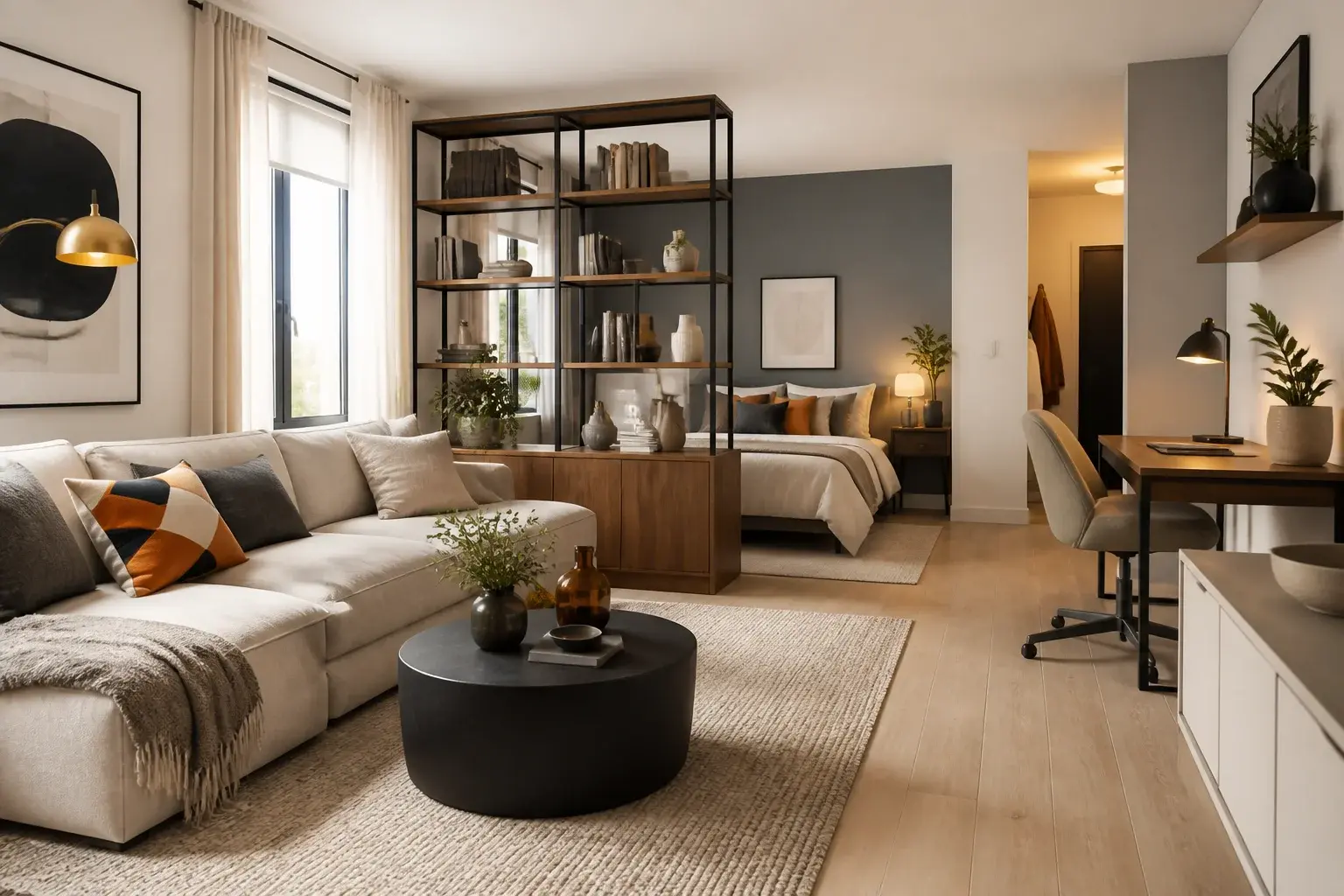
They say studio apartments train your multitasking skills. You know what? They’re also secretly just asking you to get creative with space. Let’s cut the fluff and get you a place that feels bigger, brighter, and way more you—without blowing your budget or your sanity.
Make a floor plan your best friend
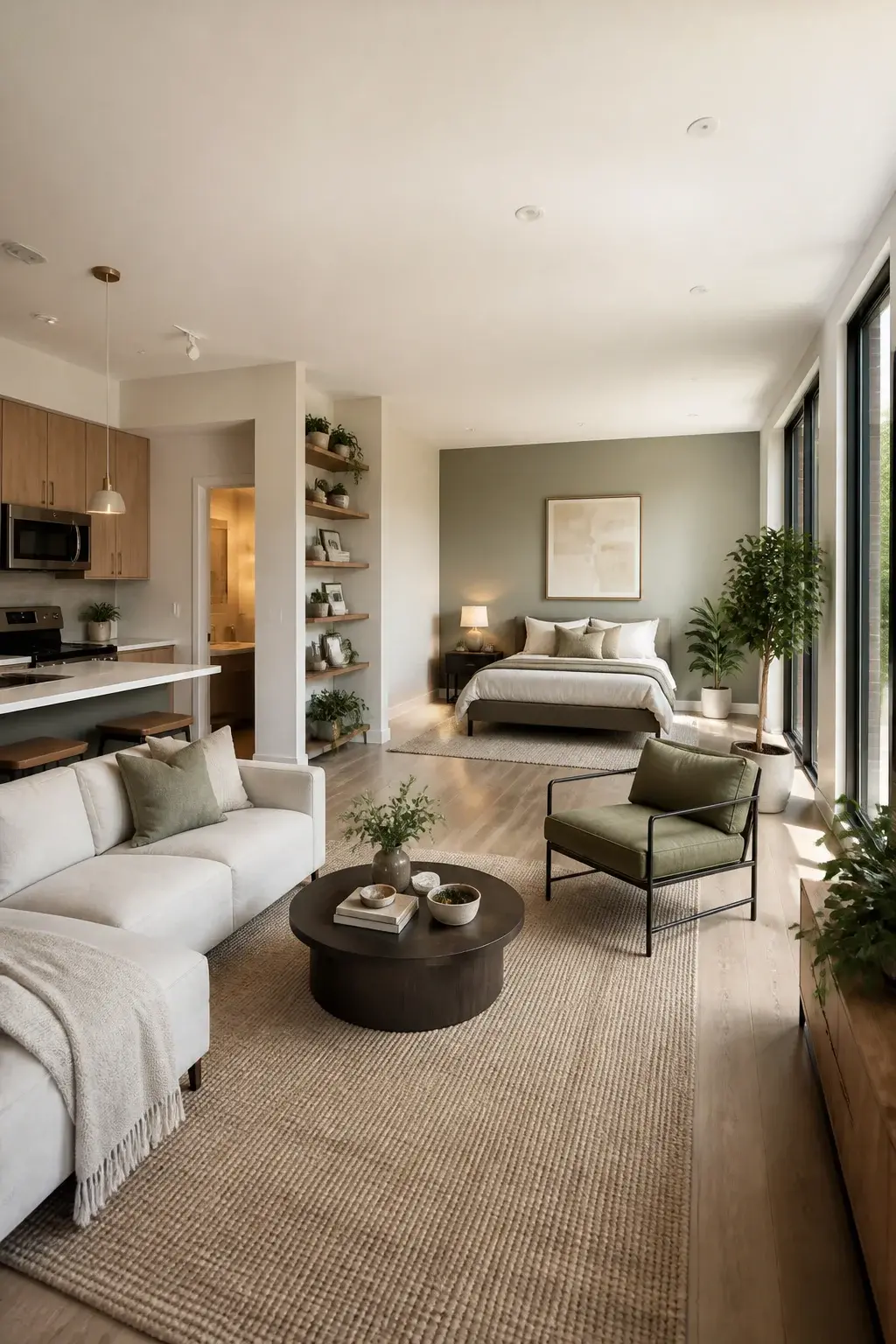
First things first: you don’t want to start decorating without knowing what you actually have to work with. Measure the room, doors, and windows. Sketch a quick layout and mark where natural light hits at different times of day. Then play Tetris with your furniture until you hit a setup that flows.
– Use a camera or room-planning app to visualize zones.
– Aim for at least two clearly defined areas: living and sleeping (even if they share a space).
– Leave a clear walkway of at least 2 feet wide.
Zones that actually feel like zones
Think of your studio like a small town with neighborhoods. The living area, the sleeping nook, and a tiny workspace each need their own vibe. A rug can anchor a zone, while a bookshelf can act as a divider without closing you in.
Color strategy that makes walls disappear
Color can fool the eye in a good way. Lighter tones bounce light around; darker accents create depth. You don’t need a white blandopia though—embrace color as a friend, not a foe.
– Pick a neutral base (warm white, soft gray, or taupe).
– Add one or two bold accents (a geometric throw, a statement lamp, a colorful vase).
– Use color in small doses on walls or textiles to avoid shrinking the space.
Doorways, walls, and the trick of the mirror
If your place has a single, tiny doorway, use a tall mirror on the opposite wall to multiply light and space. Mirrors = instant airiness. FYI, angled or framed mirrors can become design features, not just reflective surfaces.
Smart furniture that earns its spot
In a studio, every piece should do double duty. Look for furniture that exports weight and imports storage.
– Storage ottomans with hidden compartments
– A sofa bed or a daybed for guests
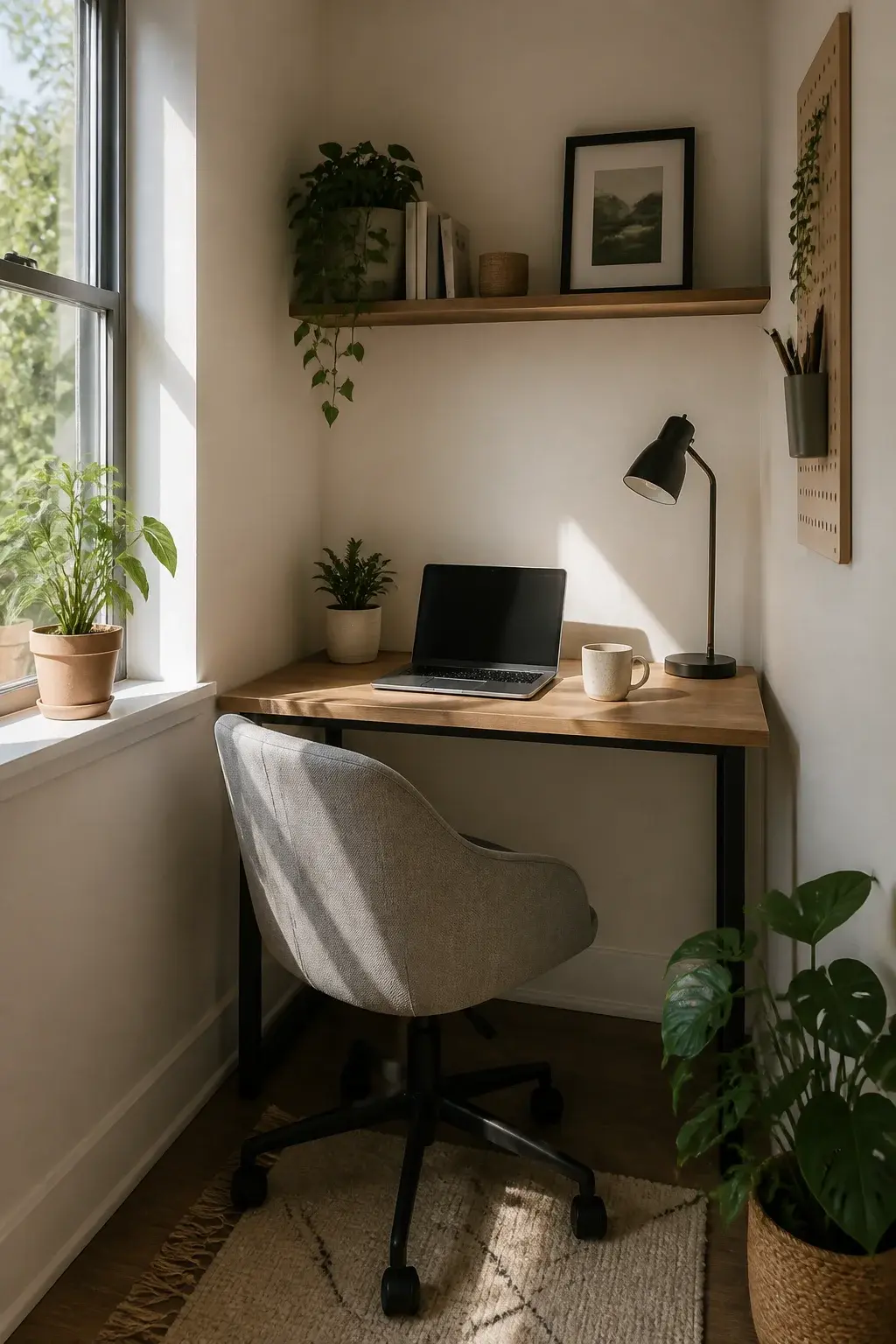
– A fold-out desk or wall-mounted drop-leaf table
– Stackable or nesting tables you can pull out when you host
Floating, folding, and flexible setups
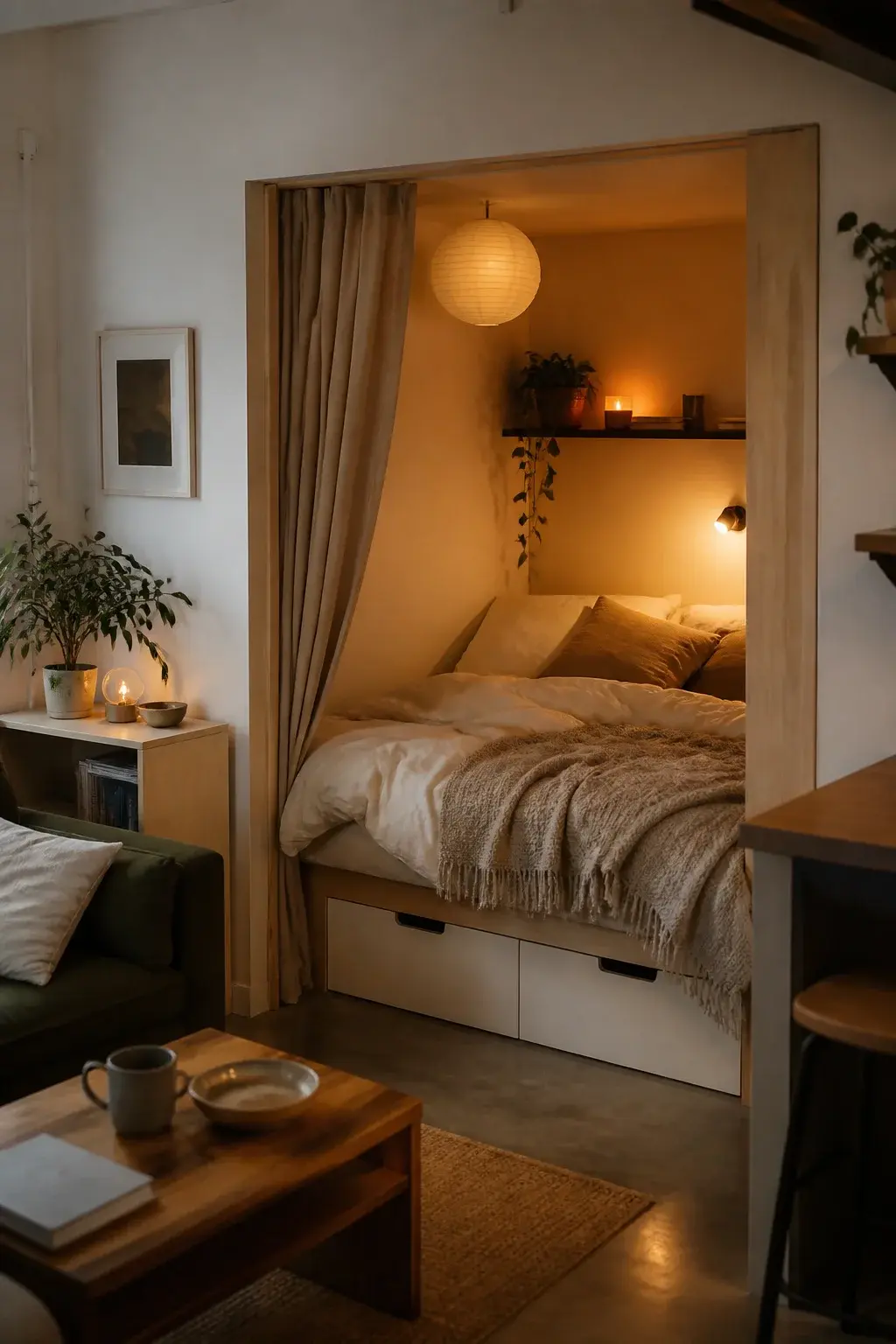
Floating shelves keep floor space free, while a wall-mounted coat rack frees up closet real estate. A foldable desk that tucks into a closet or under a bed can be your best friend during work-from-home weeks.
Studio lighting that makes friends with every mood
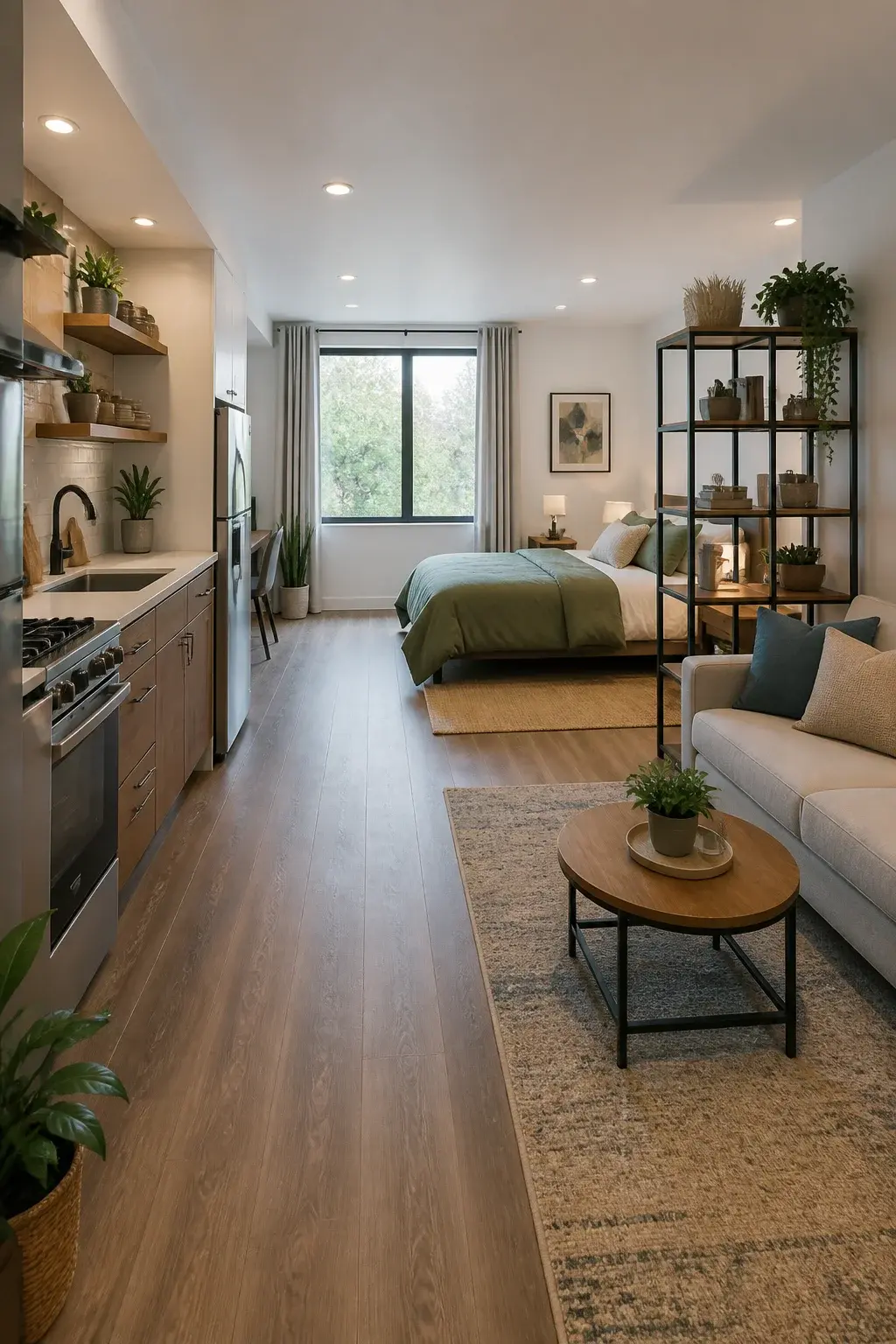
Lighting is mood lighting. A studio can default to vibes you didn’t even know you had—if you light it right.
– Layer light: ambient, task, and accent
– Use warm bulbs (around 2700–3000K) for coziness; a cooler desk light for focus
– Dimmer switches are your best budget upgrade
Statement lighting without stealing space
A slim floor lamp or a ceiling pendant can act as a focal point without crowding the room. Table lamps on shelves soften edges and help you avoid that harsh, clinical look.
Texture and textiles: the texture spice rack
Texture adds depth when color can’t. Mix fabrics, materials, and patterns to create warmth and personality.
– Velvets, knits, and linen-looking fabrics add coziness
– Layer rugs for zones or use one large rug to unify the space
– Throw blankets and cushions are cheap, high-impact upgrades
Pattern balance: big prints vs. small prints
If you choose bold prints, keep them on cushions or a single larger item, and balance with solid neutrals elsewhere. This stops the space from feeling chaotic.
Declutter, then let things breathe
Clutter is the enemy of a smartly decorated studio. You don’t have to go full Marie Kondo, but you do want intentional storage.
– Every item should have a home
– Use vertical storage to free floor space
– Rotate decor seasonally to keep things fresh without accumulating junk
Hidden storage ideas you’ll actually use
– Under-bed storage bins with clear tops
– A coffee table with a lower shelf
– Bedside crates or narrow cabinets that tuck beside the mattress
Personal touches that feel like “you,” not a showroom
Your space should tell a story. Add elements that reflect your life—photos, travel finds, guitars, plants, books. But curate, don’t clutter.
– Curate a small gallery wall with matching frames
– Show off a few plants for life and color
– Pick a few statement items you truly love and rotate them
Plants that thrive in small spaces
If you’re not a plant person, start with low-maintenance options: pothos, snake plants, or ZZ plants. Place them near natural light to keep leaves happy. FYI, a plant shelf can double as a decorative feature and extra storage.
FAQ
How do I make a studio feel bigger without knocking down walls?
Use light colors, strategic mirrors, and vertical storage. Zones help the eye organize space, and a single, cohesive color palette prevents visual chaos. Keep floors clear and furniture arranged in a way that guides movement.
What are the must-have pieces for a small budget studio?
– A fold-out desk or wall-mounted table
– A sofa bed or daybed
– Floating shelves and under-bed storage
– A couple of smart lighting options (dimmable if possible)
– A neutral rug to anchor the space
How can I decorate without turning my place into a chaotic gallery?
Limit your palette, rotate decor every few months, and curate with intention. If it doesn’t serve a function or bring you joy, swap it out. Boring items should stay in the closet until you give them a purpose.
Is it worth investing in multipurpose furniture?
Definitely. Multipurpose pieces save space and money in the long run. A storage ottoman, a bed with drawers, or a convertible sofa can transform an ordinary room into a surprisingly expansive-feeling home.
How do I create a workspace in a studio without feeling overwhelmed?
Choose a compact, dedicated corner with a small desk, good task lighting, and a chair you actually like sitting in. Keep clutter off the desk with organizers and a small pinboard or whiteboard for quick notes. IMO, a tidy desk equals a clear mind.
Conclusion
A studio apartment can be cozy, stylish, and totally you—without sacrificing function. Start with a smart plan, pick furniture that earns its keep, and layer in light, texture, and personality. Ask yourself what you truly need daily, then design around that. You’ve got this—your perfect, practical, photo-worthy studio is just a few clever choices away.