
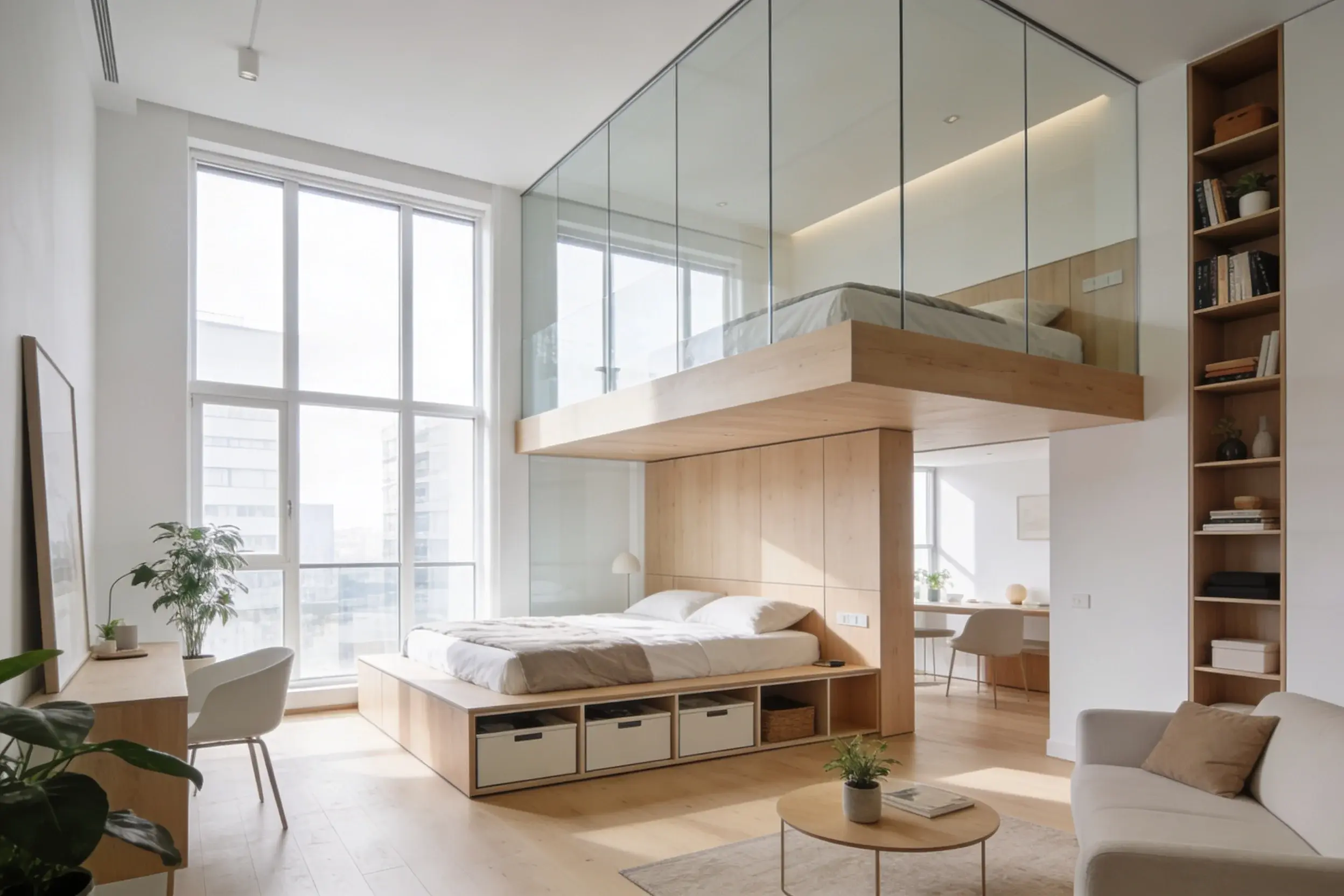
Living in a studio doesn’t mean sacrificing style for square footage. These design concepts prove you can create a stunning, functional home in even the smallest space—and honestly, some of these ideas work so well, you might prefer studio living.
1. The Elevated Platform Sleep Zone
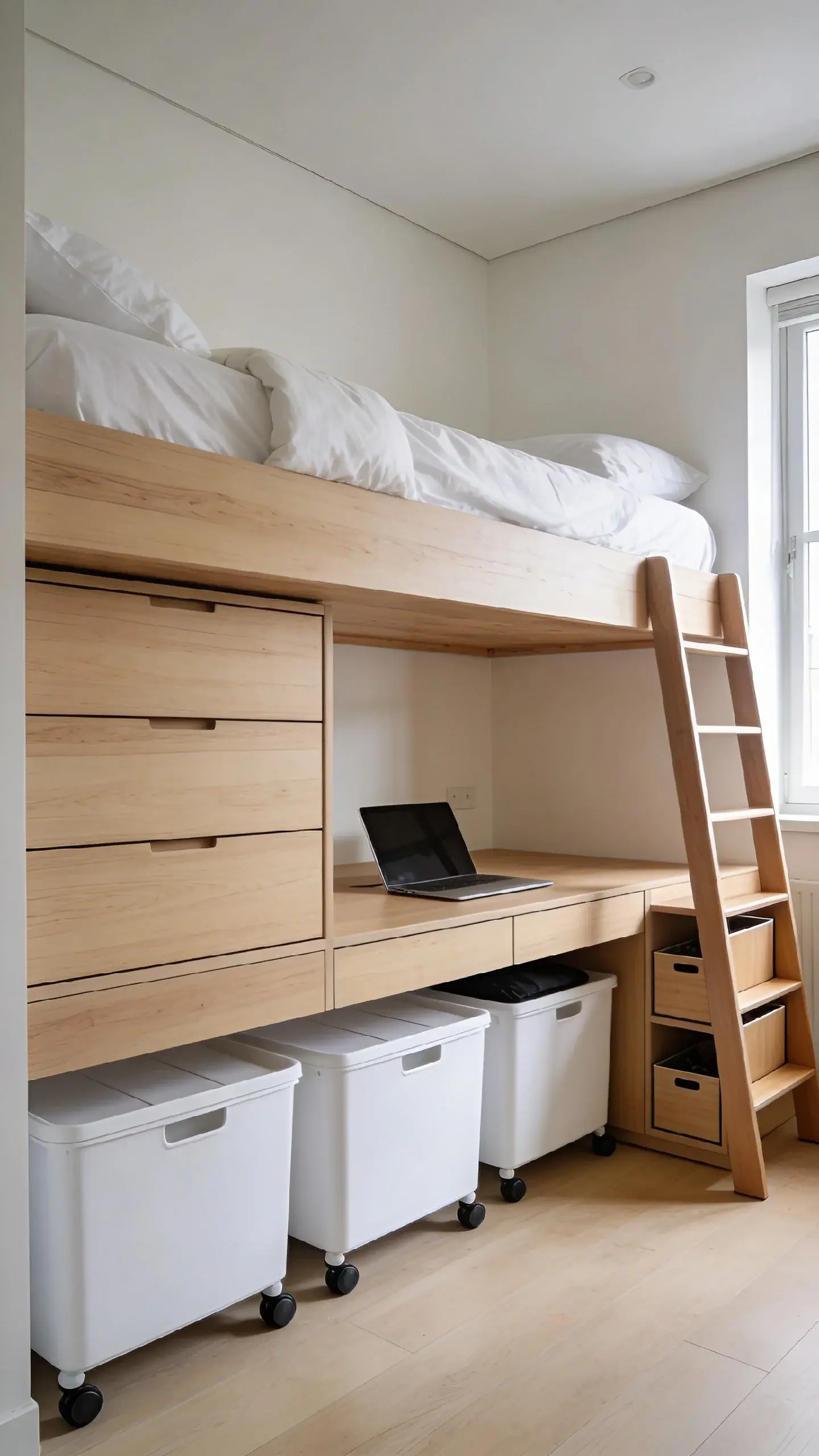
Why waste vertical space when you can build up? This design uses a raised platform bed to create an entire storage zone underneath while defining your sleeping area without walls.
The platform sits about 3-4 feet high, giving you room for built-in drawers, rolling storage bins, or even a mini workspace underneath. Add a sleek ladder or small staircase (with built-in storage, naturally), and you’ve got a sleeping loft without the commitment of permanent construction.
Design Details:
- Light wood or white platform to keep things airy
- Low-profile mattress and bedding in neutral tones
- Curtains or panels that can drop down for privacy
- String lights or recessed lighting for ambiance
This works brilliantly if you’re comfortable with a bit of climbing and want maximum storage without cluttering your floor space. It’s like having a secret compartment in your own home.
2. The Glass Partition Illusion
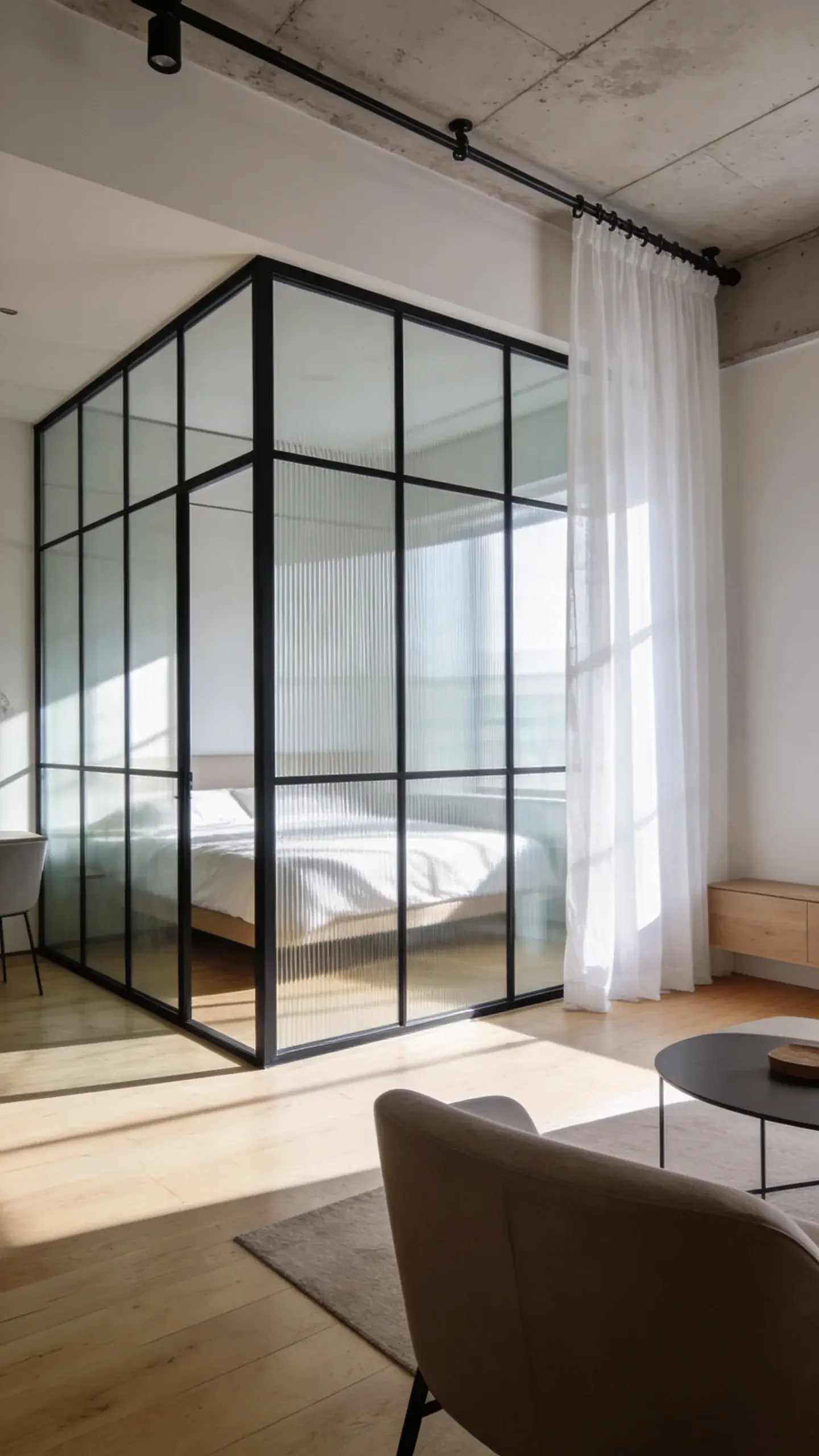
Create a separate bedroom without making your studio feel like a cave. Floor-to-ceiling glass partitions or frosted glass panels divide your sleeping area while letting natural light flow through the entire space.
Choose between completely clear glass for maximum openness, fluted glass for texture and partial privacy, or frosted panels for full privacy with light transmission. Frame it in black metal for an industrial edge or warm wood for Scandinavian vibes.
Add sheer curtains on a ceiling track behind the glass for those times you want complete privacy. The beauty here is flexibility—you get definition without darkness, and your studio still feels spacious and connected.
3. The Murphy Bed Transformation
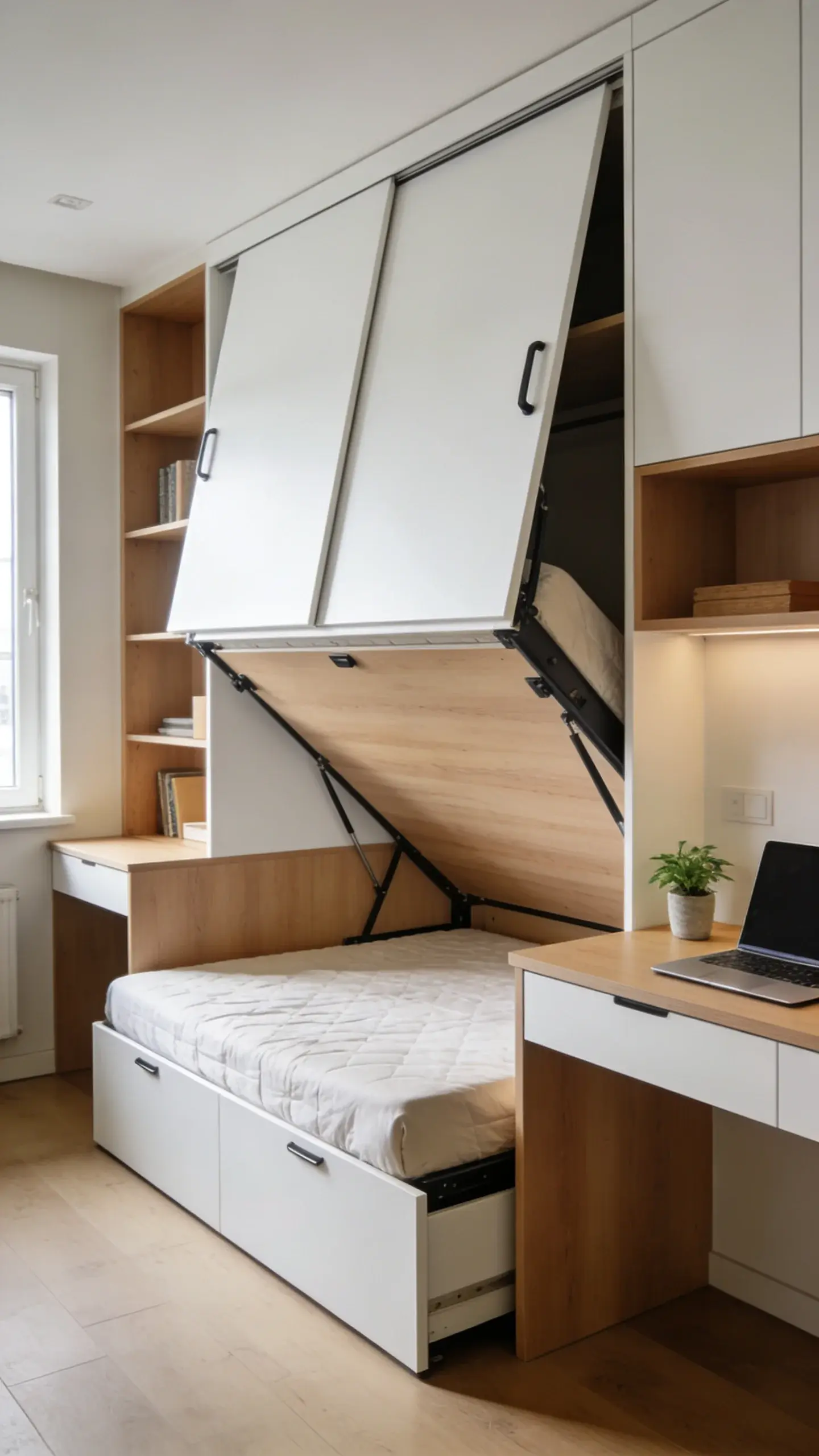
Okay, hear me out—modern Murphy beds aren’t your grandma’s clunky wall contraptions anymore. Today’s versions are sleek, stylish, and some even come with built-in desks or shelving units that stay put when the bed folds up.
Go for a white or light wood cabinet design that blends with your walls, or make it a statement piece with bold colors or decorative panels. Some models include integrated sofas that transform your sleeping area into a living room during the day.
Best Features:
- Built-in desk that remains functional when bed is down
- Shelving units on either side for books and decor
- Hydraulic lift systems (no more struggling with pulleys)
- USB charging ports and integrated lighting
Perfect for anyone who works from home and needs their studio to pull double duty. Trust me, reclaiming 50+ square feet every morning changes everything.
4. The Monochromatic Zone System
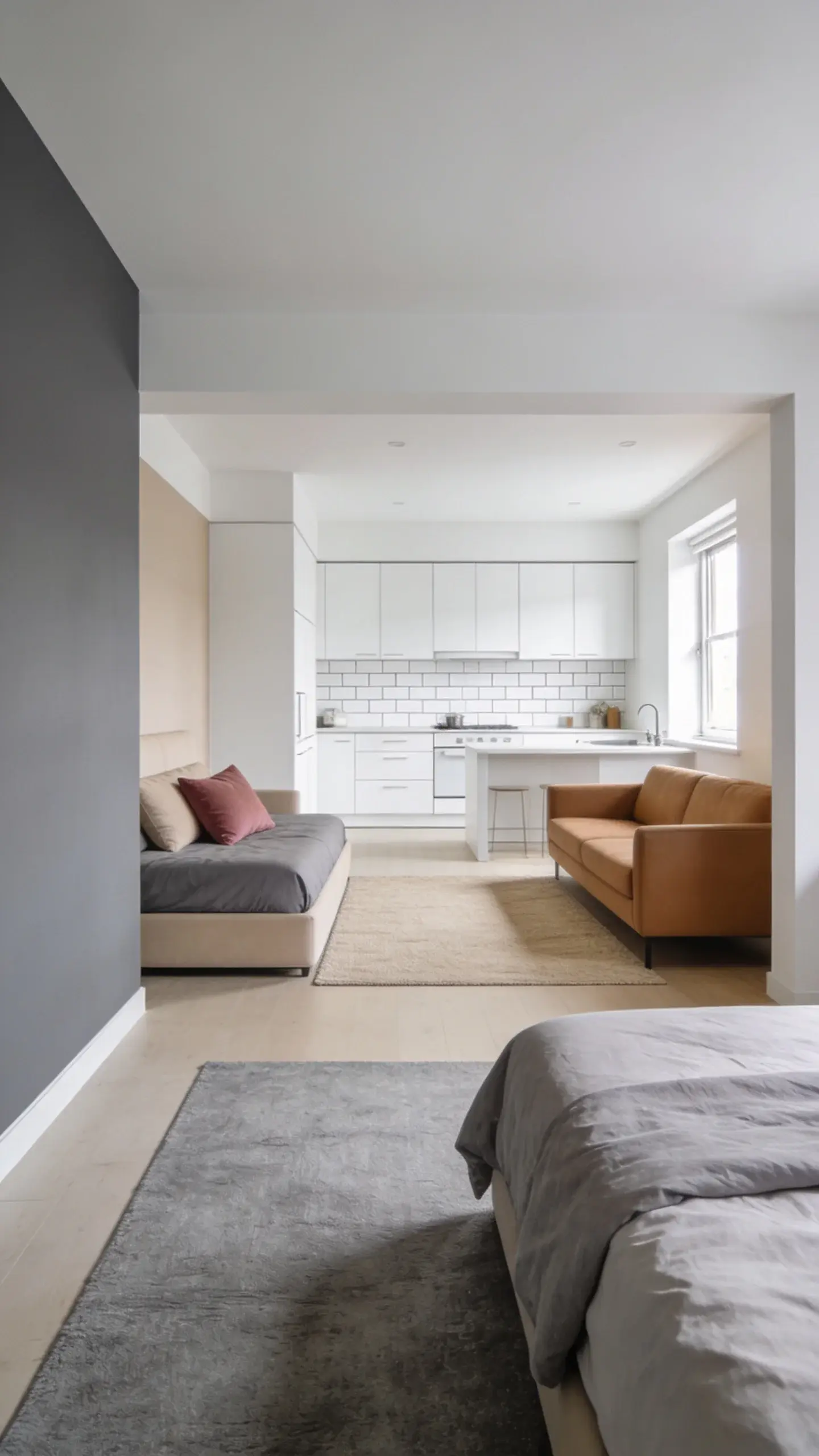
Who says you need walls to define different areas? This design uses color blocking to create visual zones—sleeping area in soft greys, living space in warm beiges, and kitchen area in crisp whites.
Carry the color scheme through rugs, furniture, wall paint, and textiles. The transitions create natural boundaries that your brain recognizes as separate spaces, even though everything flows together.
Add matching accent pieces in each zone—maybe dusty rose pillows appear in both the sleeping and living areas to tie everything together. The result feels intentional and sophisticated, not like you just randomly placed furniture around.
5. The Industrial Loft Aesthetic

Embrace those exposed pipes and concrete walls! This design leans into raw materials—metal, reclaimed wood, and brick—to create an urban sanctuary that feels like a downtown loft.
Hang Edison bulb pendants from black cord, add a rolling ladder bookshelf, and incorporate metal-framed furniture with leather or canvas upholstery. Keep the color palette to blacks, greys, browns, and warm metallics.
Essential Elements:
- Exposed shelving with metal brackets
- Vintage factory cart as a coffee table
- Large industrial mirrors to reflect light
- Concrete or distressed wood accent wall
This vibe works especially well in older buildings or spaces with high ceilings. It’s moody without being dark, and every piece feels purposeful.
6. The Scandinavian Minimalist Haven
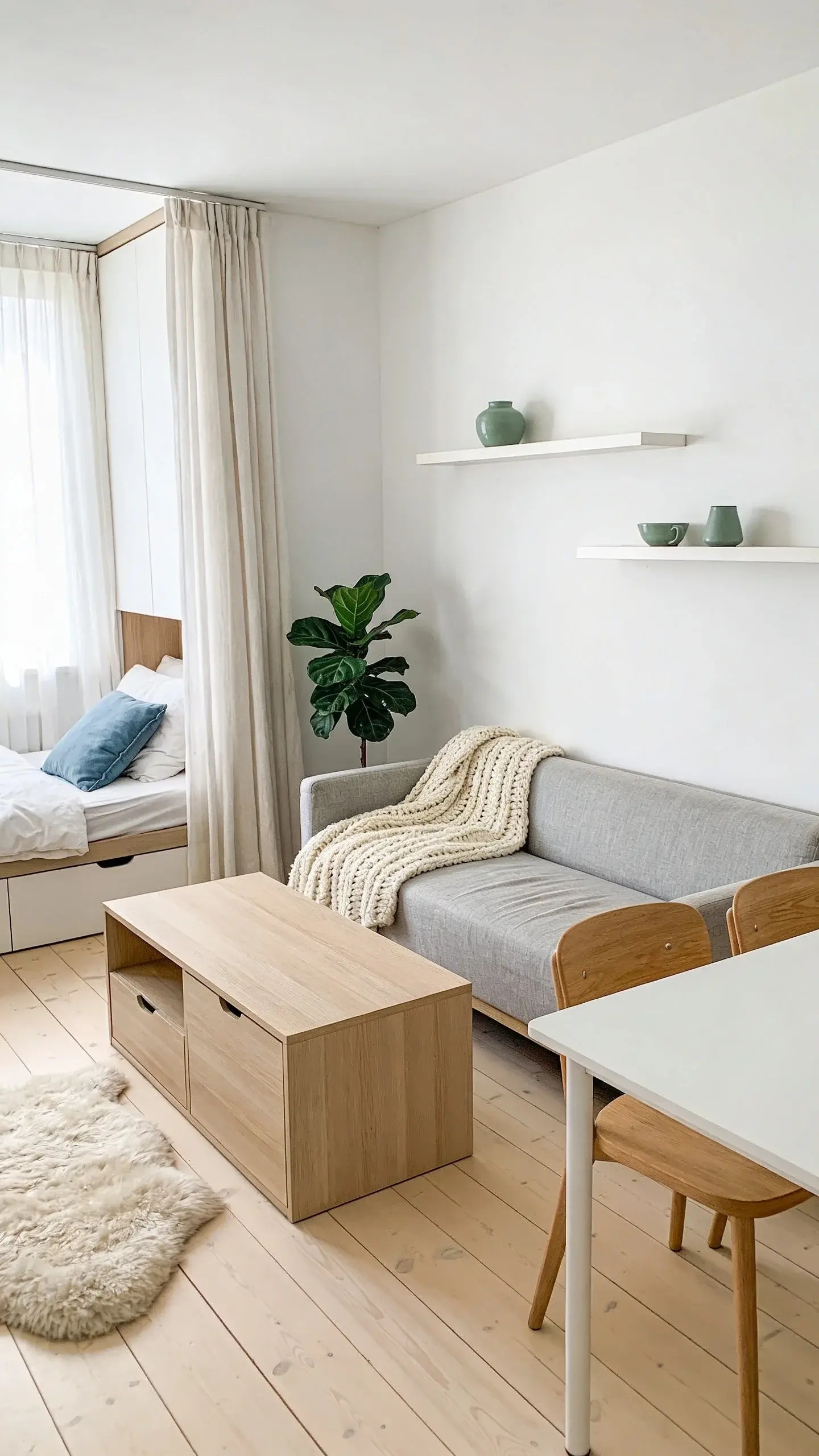
Less is absolutely more in this design. Think white walls, light wood floors, and carefully curated furniture that serves multiple purposes without screaming “multifunctional furniture!”
Stick to a palette of whites, soft greys, and natural wood tones, with maybe one muted accent color like sage green or dusty blue. Every piece should spark joy (yes, really) and have clean lines.
Incorporate natural textures—a chunky knit throw, a sheepskin rug, linen curtains—to keep the space from feeling sterile. Add plenty of plants for life and warmth. The goal is calm, uncluttered, and breathable.
7. The Bohemian Studio Sanctuary
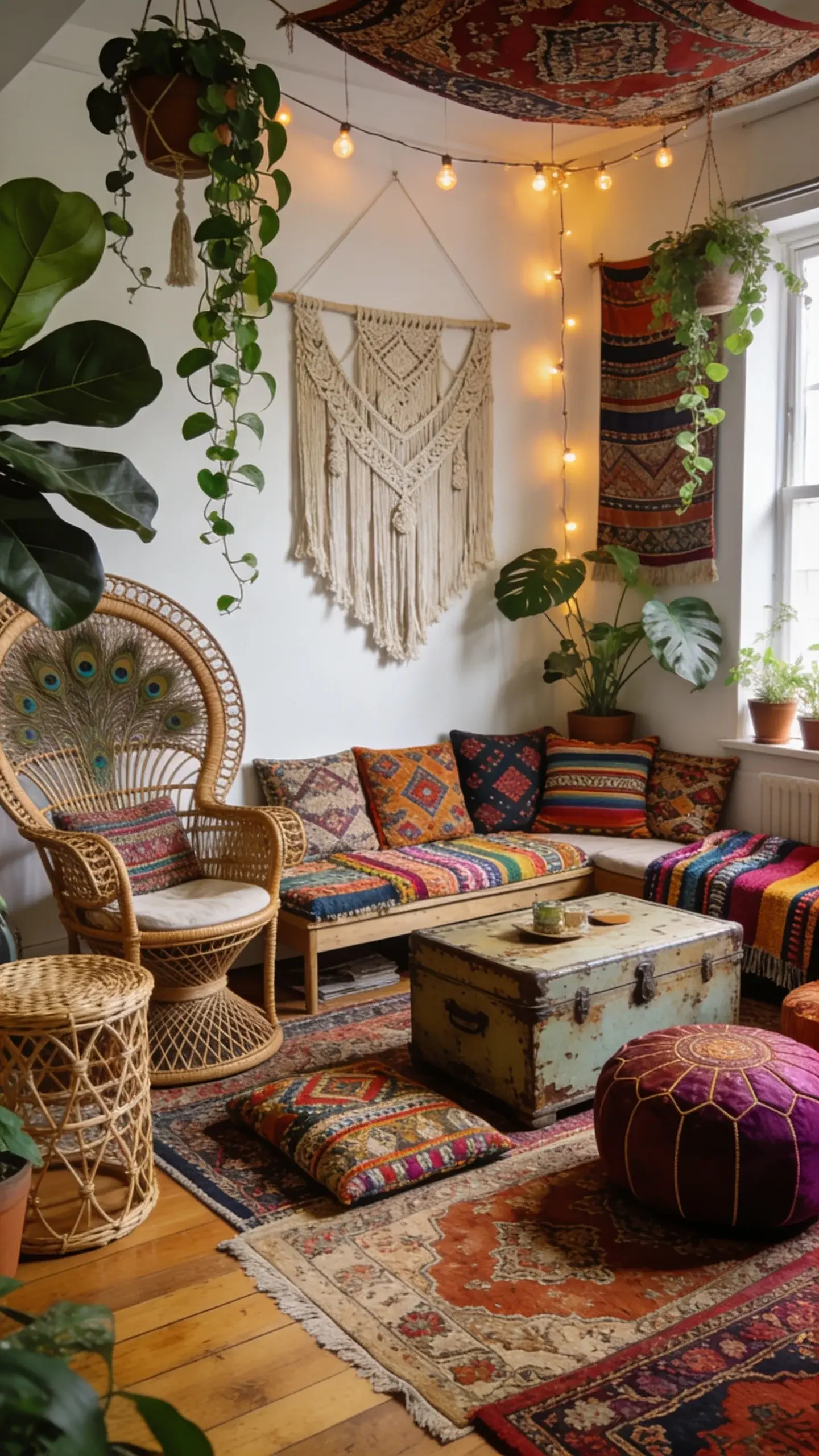
Layer upon layer of patterns, textures, and global finds create this collected-over-time aesthetic. Macramé wall hangings, vintage rugs, rattan furniture, and floor cushions make your studio feel like a well-traveled creative lives here.
Don’t match—mix! Combine a Moroccan pouf with a Mexican blanket and Indian block-print pillows. Hang string lights and fabric tapestries. Create a low seating area with floor cushions and a vintage trunk as a coffee table.
Boho Essentials:
- Tons of plants in hanging planters and on stands
- Layered rugs in different patterns and textures
- Warm Edison bulbs and paper lanterns
- Natural materials like rattan, jute, and bamboo
This style loves clutter (the good kind), so it’s perfect if minimalism makes you twitch. Just keep it organized chaos, not actual chaos.
8. The Curtain Divider Dream
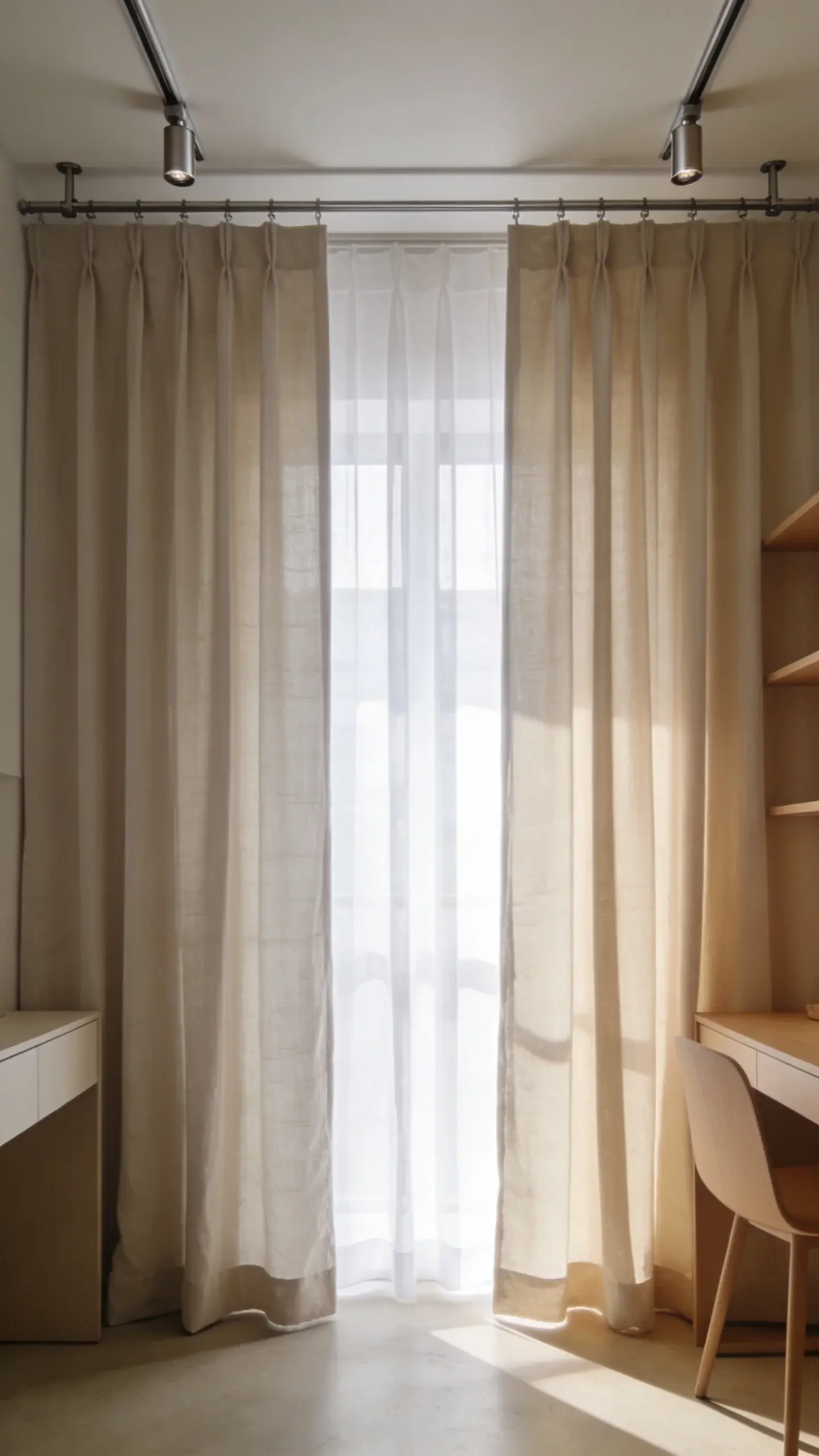
Sometimes the simplest solutions are the best. Ceiling-mounted curtain tracks let you create flexible walls that disappear when you don’t need them.
Choose heavy linen curtains in a neutral tone for privacy and sound dampening, or go with sheer panels for soft separation that still lets light through. You can even mix both—sheers for daytime privacy, heavy drapes for nighttime.
The genius part? You can configure the space differently for different occasions. Hosting friends? Pull everything open. Need to hide your unmade bed during a work call? Close it up. Install them on a curved track to create a cozy rounded sleeping nook.
9. The Multi-Level Living Concept
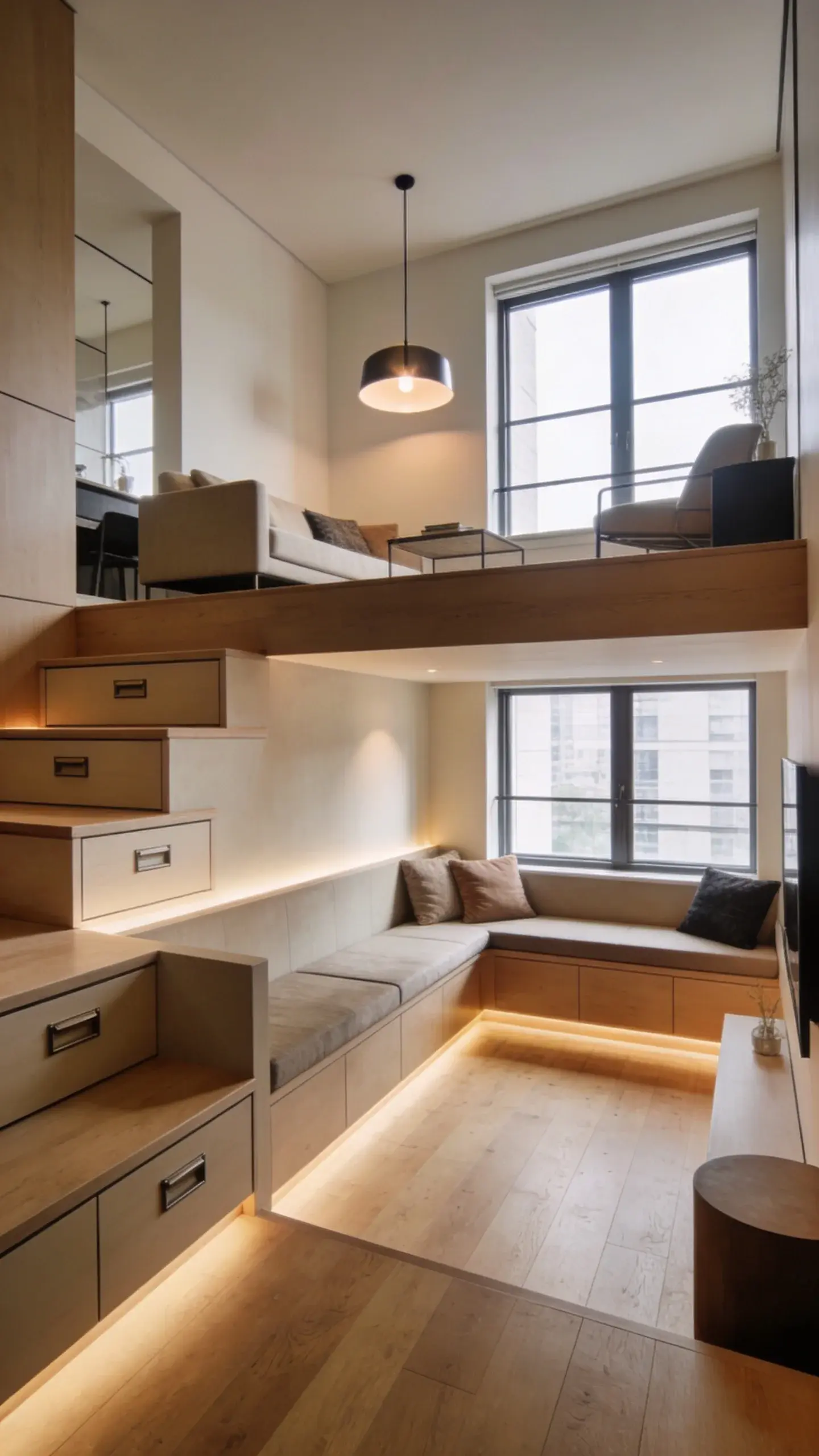
Different floor heights create distinct zones without walls. A raised living area with a couple steps up immediately separates it from your sleeping space, while a sunken seating nook by the windows creates an intimate reading corner.
This works best if you’re doing renovations or have some flexibility with your space. Use the level changes to hide storage drawers in the risers, or incorporate built-in seating along the edges of raised platforms.
Add different lighting for each level—pendant lights over the raised area, recessed lighting in the sunken space—to further emphasize the separation. It’s architectural interest without actual walls.
10. The Galley Kitchen Integration
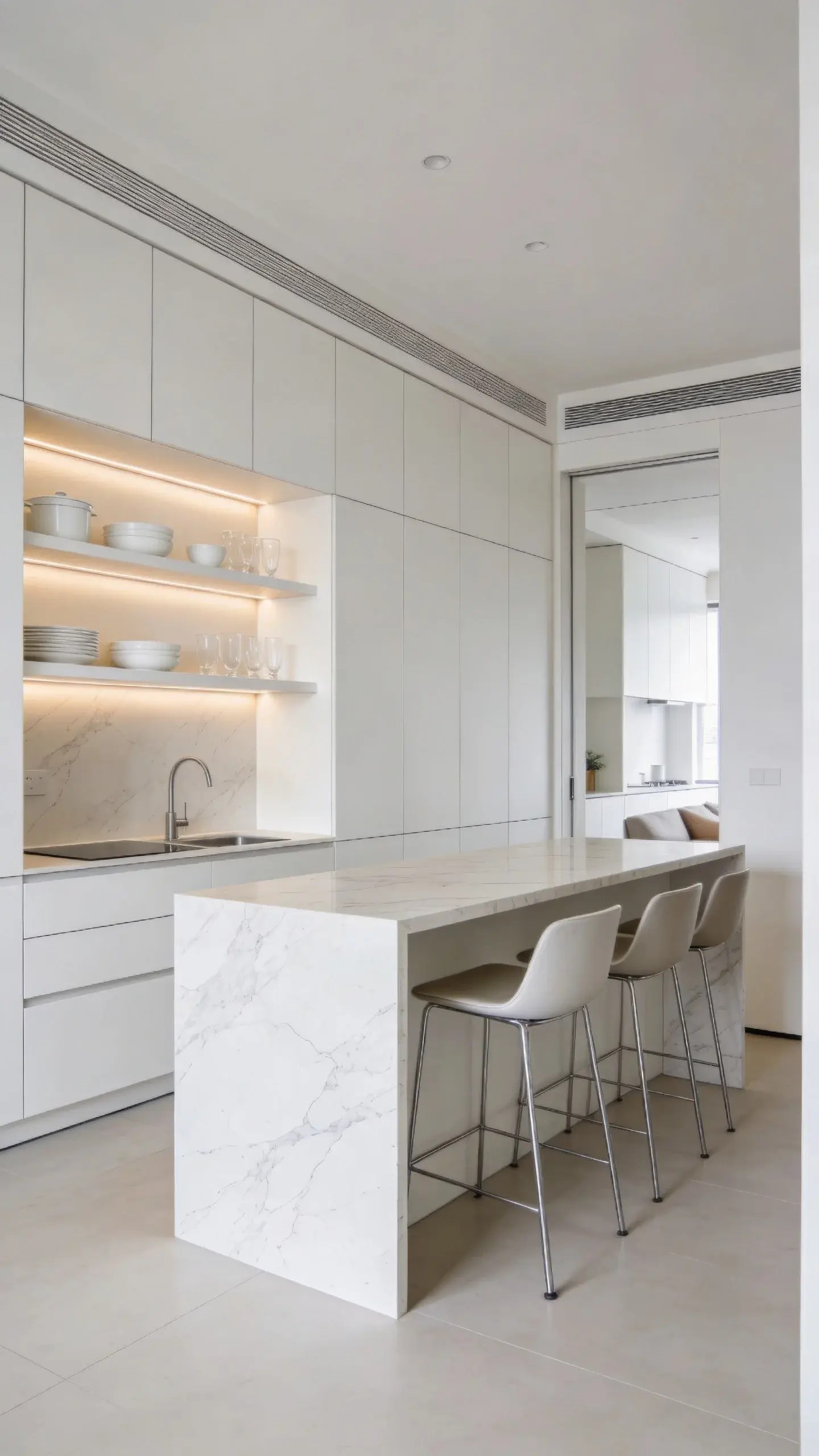
Turn your kitchen into a design feature instead of hiding it. This concept uses a sleek galley-style kitchen with handleless cabinets and integrated appliances that blends seamlessly into your living space.
Choose matte black or white cabinetry that extends to the ceiling for maximum storage. Add a waterfall edge counter that doubles as a dining bar with stylish bar stools tucked underneath.
Smart Kitchen Features:
- Panel-ready appliances that match your cabinets
- Open shelving with matching dishes as decor
- Pendant lights that define the kitchen zone
- Rolling cart for extra prep space and storage
This design proves your kitchen doesn’t need to be hidden behind a wall or screen—when it’s beautiful, why hide it?
11. The Convertible Furniture Wonderland
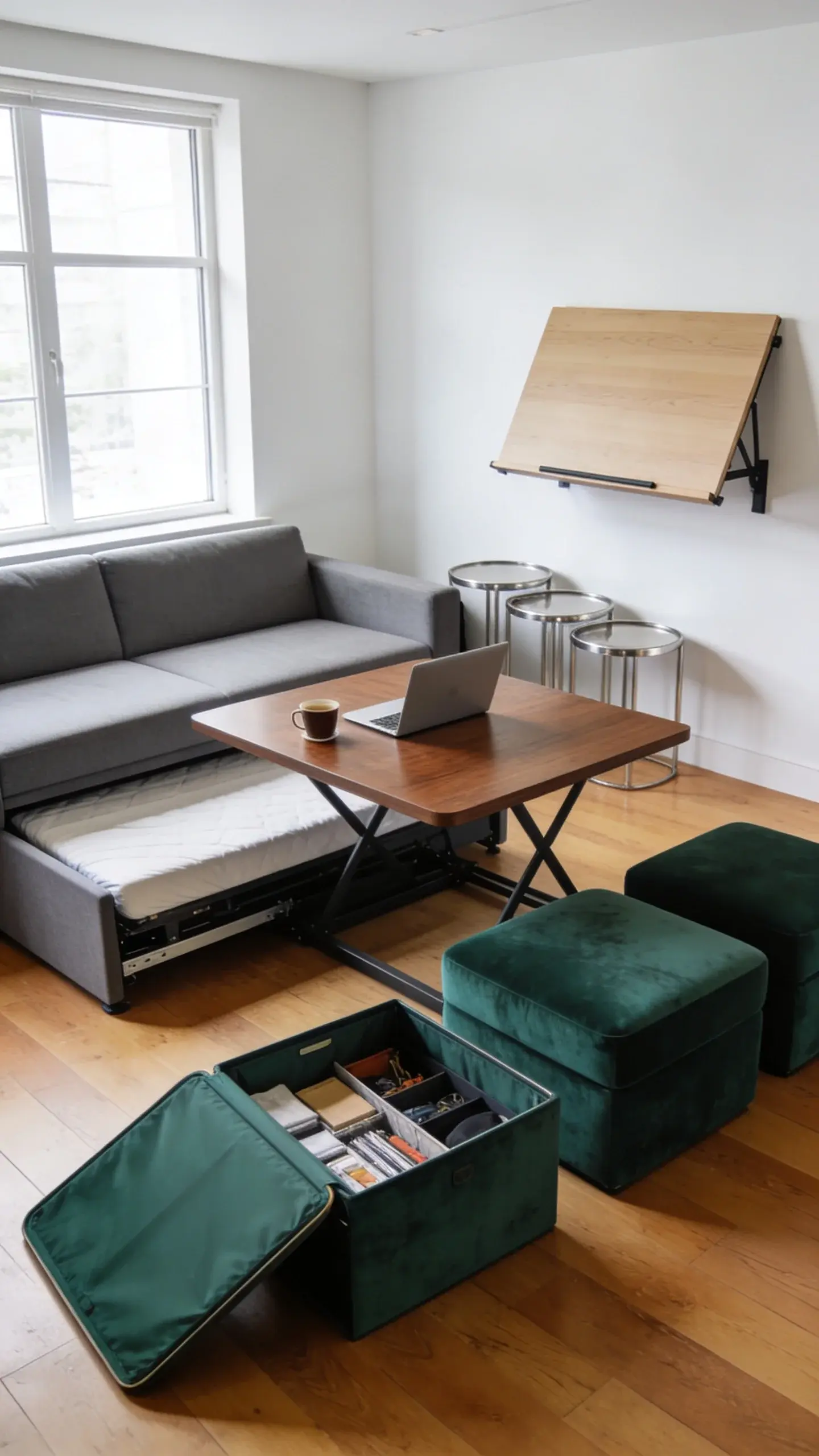
Every piece does double or triple duty in this ultra-functional setup. A sofa that transforms into a bed, a coffee table that lifts to dining height, and ottomans with hidden storage make this studio ready for anything.
The trick is choosing pieces that don’t scream “transformer furniture.” Look for sleek designs in quality materials—a proper storage ottoman in velvet or leather looks intentional, not desperate.
Add nesting tables that tuck away when not needed, wall-mounted drop-leaf tables for dining, and a storage bed frame with drawers. FYI, the goal is functionality that doesn’t sacrifice aesthetics.
12. The Home Office Priority Studio
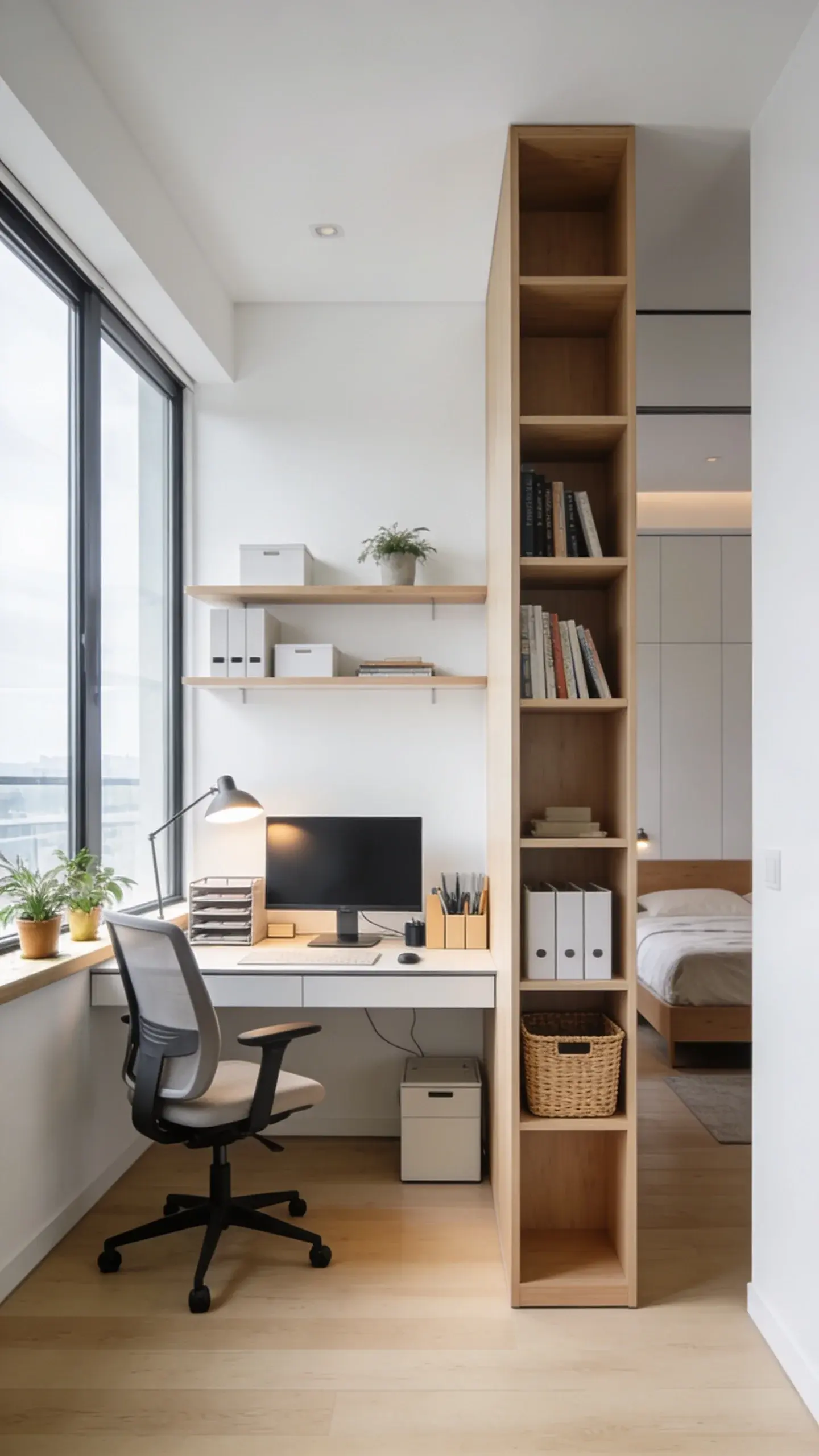
Your workspace takes center stage in this design, because let’s be real—if you work from home, your desk setup deserves the best spot. Give your office area the window wall and build the rest of the studio around it.
Create a proper desk setup with ergonomic seating, task lighting, and organized storage. Use a large bookshelf or shelving unit as a room divider between your office and sleeping area—it provides storage while creating visual separation.
Work-from-Home Essentials:
- Adjustable standing desk with cable management
- Ergonomic chair that doesn’t look like office furniture
- Acoustic panels disguised as art
- Plants and personal items to make Zoom backgrounds interesting
Perfect for remote workers who need a real workspace, not just a laptop on the couch. Your back and your productivity will thank you.
13. The Mirror Magic Expansion
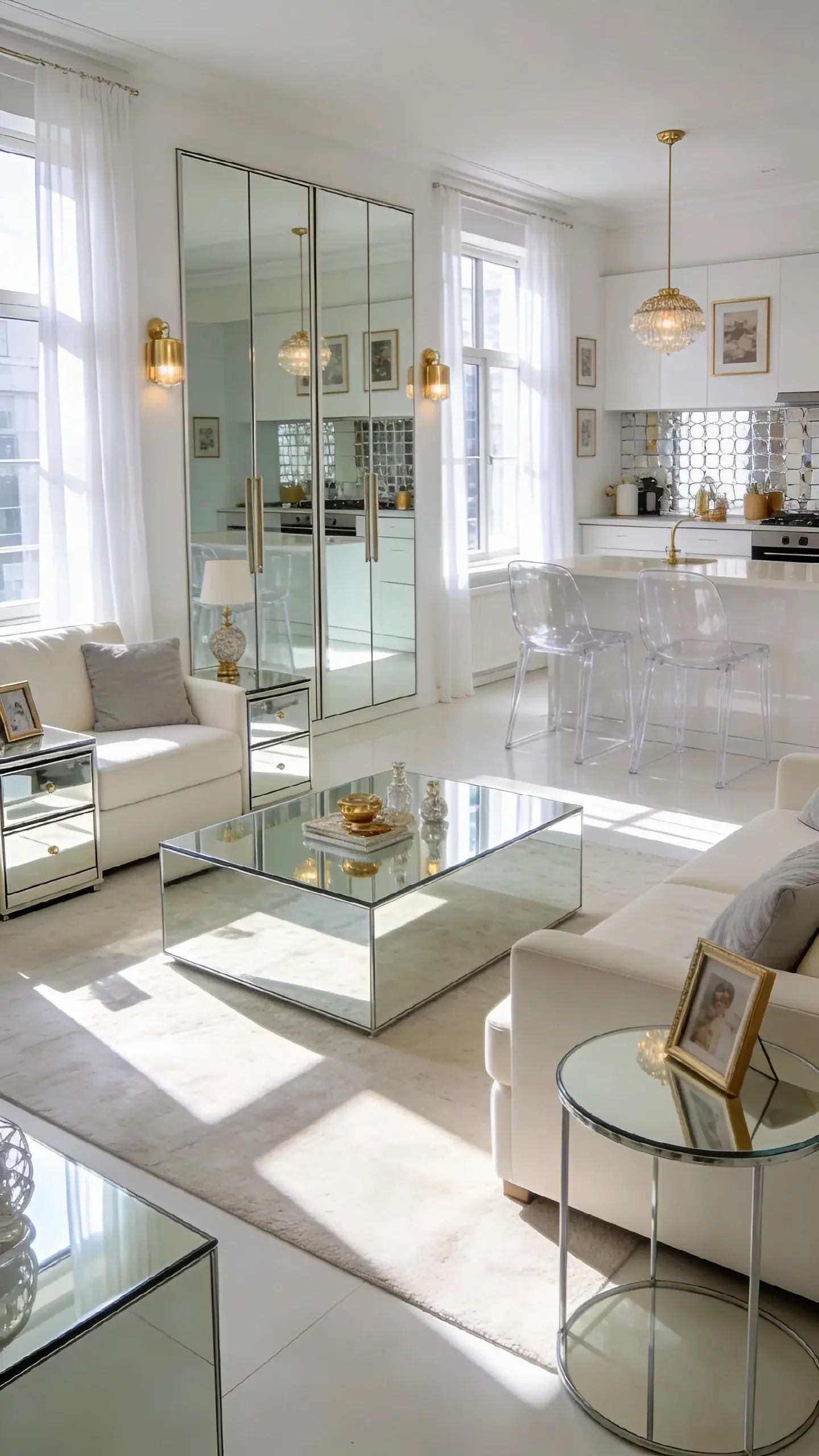
Strategic mirror placement doubles your visual square footage. This design uses a floor-to-ceiling mirror wall opposite the windows to bounce natural light and create the illusion of twice the space.
Go beyond one wall though—add mirrored closet doors, mirrored furniture, and even mirrored backsplashes in the kitchen. Layer in metallic accents and glass furniture to enhance the light-reflecting effect.
Keep the color palette light and bright—whites, creams, light greys—with metallic golds and silvers for warmth. The result feels open, airy, and way bigger than reality. Seriously, mirrors are magic.
14. The Japanese-Inspired Zen Studio
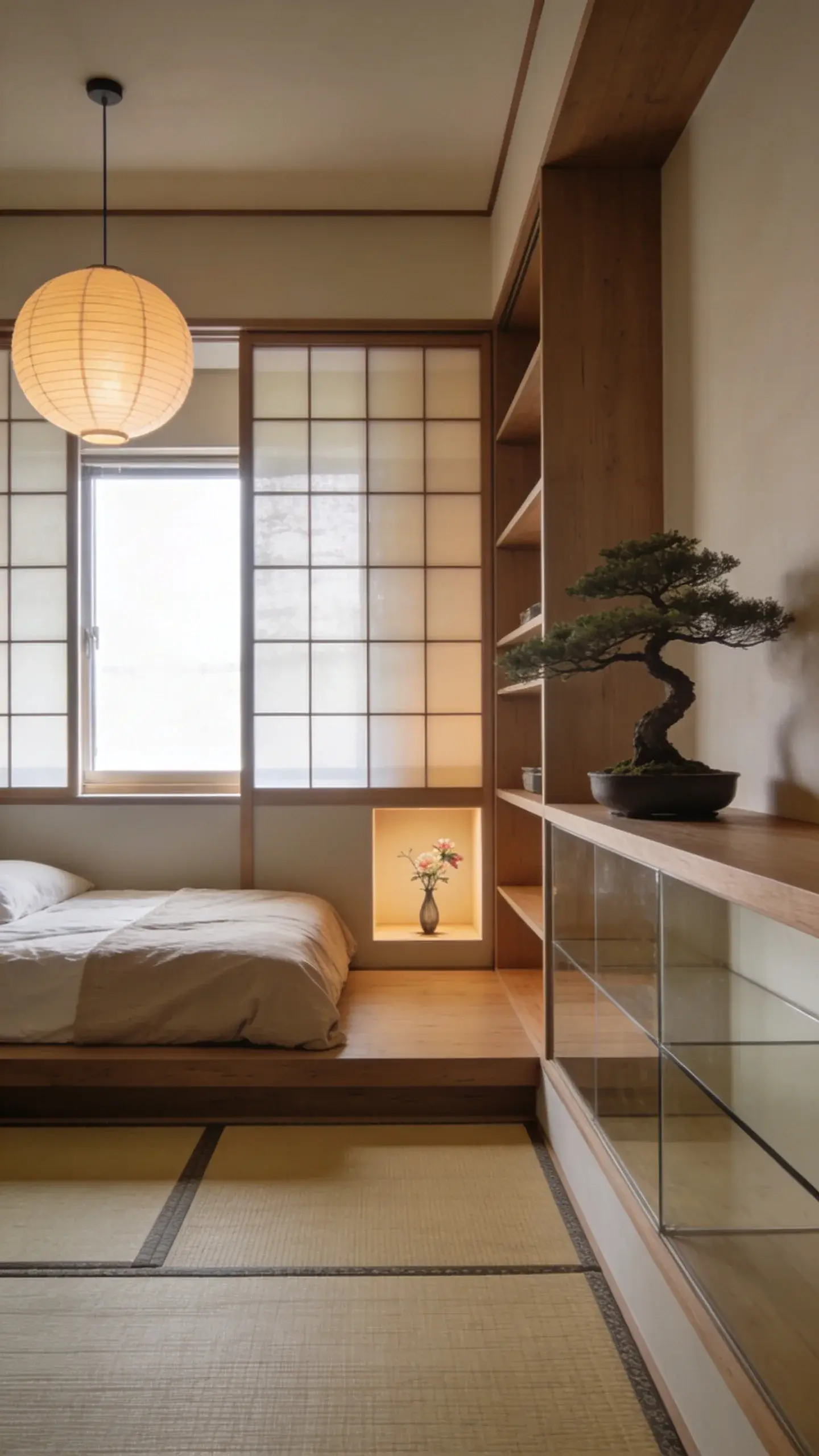
Embrace wabi-sabi principles with this serene, minimalist design. A low platform bed, shoji screen dividers, and natural materials create a peaceful sanctuary that celebrates simplicity and imperfection.
Use a neutral palette of beiges, taupes, and natural wood tones. Incorporate tatami mats, paper lanterns, and bonsai trees or ikebana arrangements. Keep surfaces clear and clutter hidden in built-in storage.
The beauty is in the restraint—every item has purpose and meaning. This works wonderfully if you want your studio to feel like a meditation retreat where you can actually breathe and think clearly.
15. The Bold Accent Wall Studio
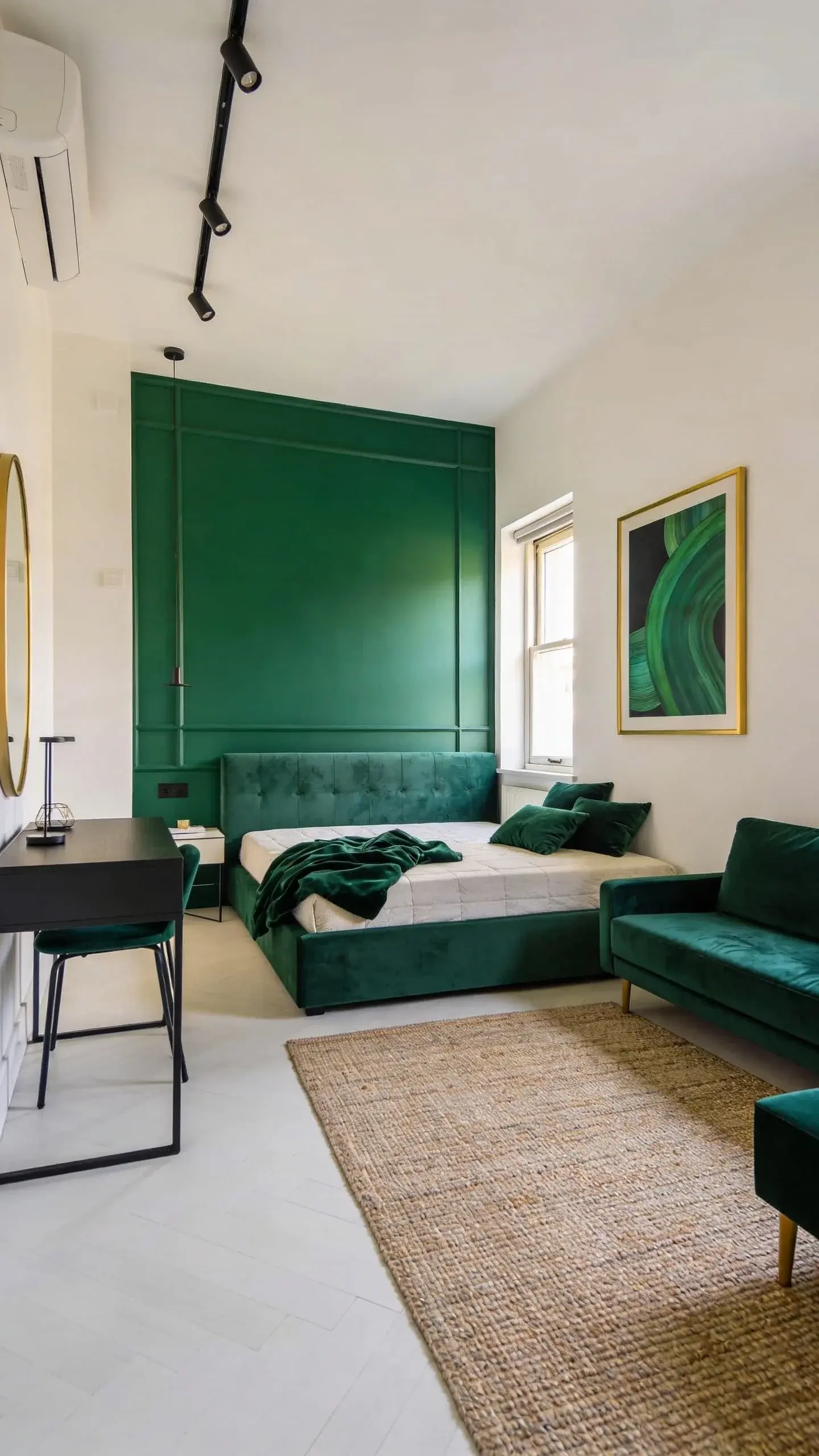
One dramatic wall anchors the entire space in this design. Choose a deep jewel tone like emerald green or navy blue, a bold wallpaper pattern, or even a textured wall treatment like shiplap or 3D panels.
Position your bed or sofa against this feature wall to create a natural focal point. Keep the other walls neutral so the accent wall really pops. Echo the accent color in pillows, artwork, and small decor items throughout the space.
Accent Wall Ideas:
- Peel-and-stick wallpaper for renters (removable magic)
- Gallery wall with matching frames
- Painted geometric patterns or color blocking
- Reclaimed wood or board-and-batten treatment
This approach gives you that “designer studio” look without overwhelming a small space. It’s personality without chaos, and it photographs incredibly well for your Instagram.
Your studio apartment has way more potential than you think. Pick the design that speaks to your lifestyle, mix in your personal style, and watch your small space become your favorite place. You’ve got this!